Temp Mail Password Protection: Keeping Your Inbox Private
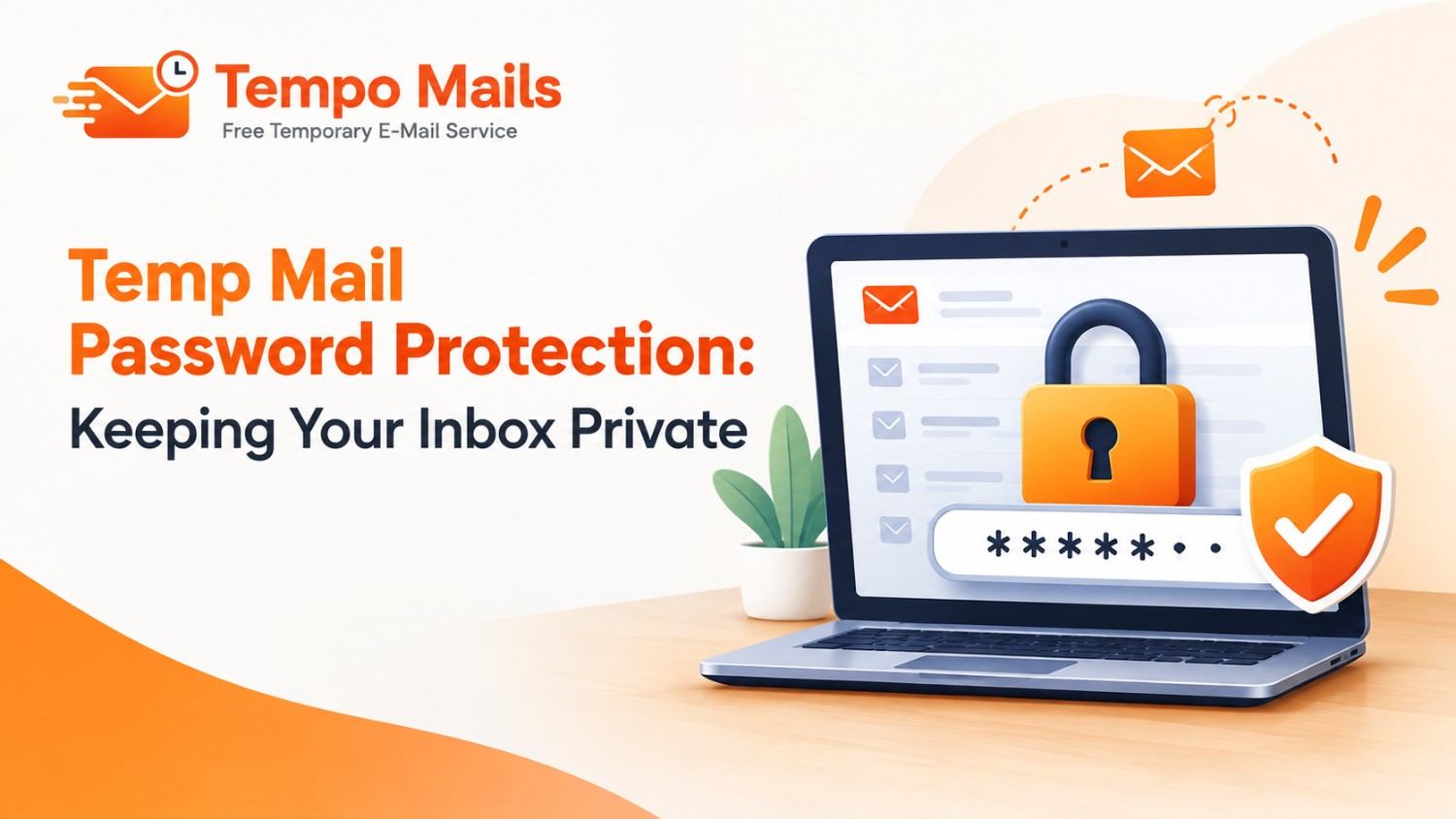
Quick Answer: Password-protected temp mail refers to securing a disposable inbox so only the intended user can access it. Most temp mail services, including Tempomails, achieve private disposable inbox access through session-based architecture rather than password systems. The session exists only in the active browser tab, so no one else can access the inbox without physically controlling the same device and browser session.
Inbox privacy on a disposable email service works differently from standard email account security. A Gmail or Outlook account uses a password to verify identity before granting access.
A session-based temporary email inbox uses the active browser session as its access credential. The inbox remains accessible while the tab stays open. Closing the tab ends the inbox.
Understanding how Tempomails achieves private disposable inbox access without passwords clarifies both its security model and its practical limitations.
Many internet users remain unaware that some disposable email platforms use publicly accessible inboxes, where anyone who knows the address can view messages, which makes inbox access model awareness a meaningful privacy knowledge gap.
Important Points
- Password-protected temp mail is not a standard feature across most services. Tempomails achieves secure temporary email access through session-based architecture instead.
- A private disposable inbox on Tempomails is accessible only within the active browser session; no password is needed because no persistent account exists to protect.
- Temp mail security through session isolation means the inbox deletes automatically when the tab closes, removing the access point entirely rather than protecting it with credentials.
- Public inbox models used by some services allow any person who knows the address to view messages; understanding which model a service uses is the first privacy decision for any temp mail user.
How Temp Mail Inbox Privacy Actually Works
Session-Based Access vs Password-Based Access
Standard email accounts protect a persistent inbox with a password. The inbox is always stored on a server. The password is the primary wall of defence against unauthorised access.
Tempomails operates on a completely different model. The inbox exists only during the active browser session. When the session ends, the inbox is deleted from the server entirely. There is nothing left to protect with a password because there is nothing left at all.
The session is the security mechanism, not a credential, but an architectural property of the service. This means the private disposable inbox is accessible to whoever has the active browser tab open.
On a personal device with no other users, this provides complete practical privacy. On a shared device, it requires the same common-sense precaution as any other sensitive browser session.
Public Inbox Models: The Alternative
Not all temp mail services use session-based private inboxes. Some platforms, including Mailinator, use a public inbox model. Anyone who enters the same address can view its messages.
Public inboxes can support shared team testing. Multiple people can access the same inbox when needed. For personal privacy use cases, they offer no inbox protection whatsoever.
Tempomails does not use a public inbox model; each session generates an independent inbox that no other user can access.
Does Tempomails Offer Password-Protected Temp Mail?
Tempomails does not currently offer a password-protected inbox feature. The privacy model doesn't use credential-based access control; instead, it uses session isolation. The inbox is ephemeral and private, which does away with the need for password-based access control for most use cases.
Some other services have account-based temp mail with password protection, as a premium service, for those who need a temporary mailbox that lasts longer than a single session and can be accessed again later with a credential.
These services trade the zero-registration simplicity of session-based tools for the added capability of persistent, credential-protected access.
Practical Temp Mail Security on Shared Devices
Risks When Using Temp Mail on Shared Computers
On a shared device, the session-based model creates one specific privacy consideration. If the Tempomails tab is left open while another user takes over the device, that user can view the active inbox not because there is no password, but because the session is still live.
This is not a flaw in the security model. It is the same consideration that applies to any open browser tab containing sensitive information. Closing the Tempomails tab before handing a device to another user ends the session instantly and permanently deletes the inbox.
Best Practices for Secure Temporary Email on Any Device
- Close the tab when done. This is the single most effective temp mail security action. Closing the tab ends the session, deletes the inbox, and removes all messages permanently.
- Do not share the address string. The Tempomails address is the only access point during the session. Anyone who knows the exact address during an active session and uses the same service interface could theoretically access the inbox if the service uses a public model. Tempomails does not, but avoiding unnecessary sharing of the address is still good practice.
- Use private browsing mode for additional isolation. Open Tempomails in a private or incognito window. This prevents browser history, cached data, and auto-fill entries from remaining after the window closes.
- Avoid using temp mail for sensitive content. Temporary email security is appropriate for verification codes, OTPs, and confirmation links. Sending or receiving genuinely sensitive personal, financial, or confidential content through any temporary email service is inadvisable regardless of the inbox access model.
Prefer working from your phone? The Tempomails Android app applies the same session-based privacy model to quick, on-the-go disposable inboxes.
How Tempomails Compares to Password-Protected Options
Services offering password-protected temp mail as a feature typically require account creation before the protected inbox is accessible. The data gathered during registration is personal information such as email address, phone number, or social credentials, and is used to create the account that the password will shield.
This trade-off is worth noting: gaining password-based inbox persistence requires surrendering the zero-registration anonymity that makes session-based temp mail appealing in the first place.
For most everyday temp mail use cases, the session-based model provides equivalent practical privacy without the registration trade-off.
When Password Protection on Temp Mail Makes Sense
Password-protected temp mail becomes relevant in three specific scenarios.
- Multi-day verification flows. When a platform sends multiple emails across several days during an onboarding process, a session-based inbox that deletes when the tab closes cannot span that timeline. A persistent, protected temp mail inbox maintains access across sessions.
- Team-shared inboxes requiring access control. Development teams that need multiple members to access the same test inbox benefit from a password-protected shared inbox that prevents unintended external access while allowing team members to log in independently.
- Sensitive test environments. QA workflows that involve confidential application data in test emails benefit from credential-controlled inbox access that prevents test message content from being visible to anyone who opens the service interface.
Ephemeral, session-based email services generally offer stronger default privacy for individual users than persistent password-protected inboxes, primarily because session deletion removes the attack surface rather than protecting it, eliminating breach risk rather than mitigating it.
Conclusion
Tempomails achieves secure temporary email access through session isolation rather than password protection, deleting the inbox entirely when the session ends rather than protecting a persistent inbox with credentials.
For individual one-time use cases, this model provides complete practical privacy. For multi-day or team-shared workflows requiring credential-controlled access, services offering account-based, password-protected temp mail addresses address that specific need directly.
About the Author
Olivia Bennett, Content Strategist at Tempomails. Documenting temp mail security models, private disposable inbox architecture, and access control approaches across leading temporary email services for privacy-conscious users and security-focused teams.
Last Reviewed: September 2026
(FAQs)
Does Tempomails require a password to access the inbox?
No. Tempomails uses session-based access; the inbox is available in the active browser tab and is deleted automatically when the tab closes, so no password is required at any stage.
Can another person access my Tempomails inbox?
Only if they have access to the same active browser tab on the same device during the same session. No remote access to the inbox is possible.
Is Tempomails safe to use on a shared computer?
Yes, with standard precautions. Close the Tempomails tab before another user accesses the device. Closing the tab ends the session and permanently deletes all inbox content.
Does Tempomails use a public inbox model where anyone can see messages?
No. Each Tempomails session generates an independent inbox accessible only within that session. No other user can view the inbox by knowing the address.
What is the difference between session-based and password-protected temp mail security?
Session-based security deletes the inbox when the session ends, removing the access point entirely. Password-based security protects a persistent inbox with credentials, requiring ongoing protection of those credentials.
Can I reopen a Tempomails inbox after closing the tab?
No. Closing the tab ends the session and permanently deletes the inbox. A new session creates a fresh inbox with a new address.
Should I use private browsing mode with Tempomails for extra security?
Yes, on shared devices. Private browsing prevents browser history, cache, and auto-fill data from persisting after the window closes. It adds another layer of isolation beyond Tempomails' automatic session deletion.
Is there any temp mail service that offers both anonymity and password protection?
Some premium services offer account-based temp mail with optional password protection. These require registration, which introduces data collection that reduces the anonymity that session-based services like Tempomails provide without any registration requirement.