What Is Temp Mail? The Complete 2026 Guide to Disposable Email
What Is Temp Mail? The Complete 2026 Guide to Disposable Email
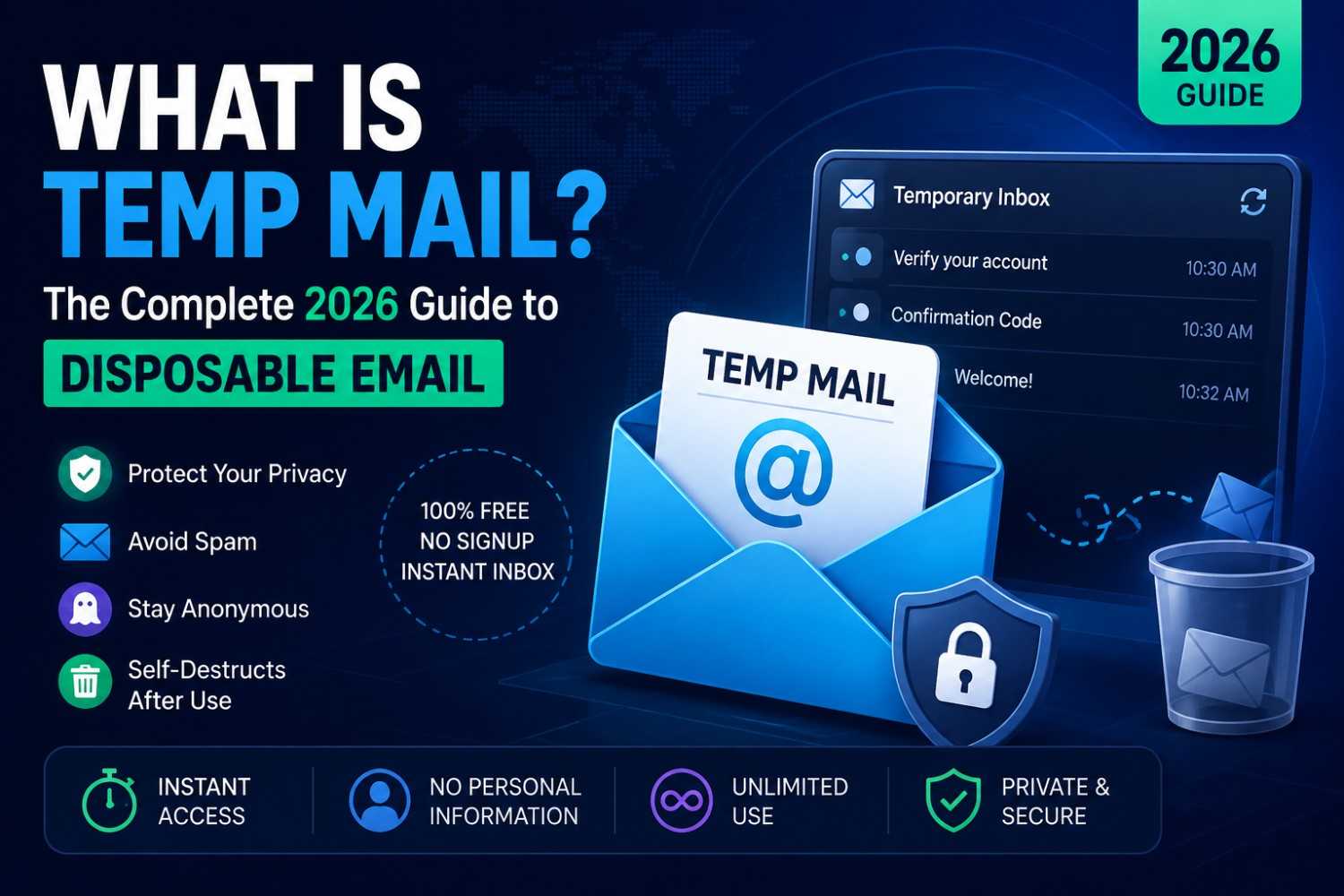
Quick Answer: Temp Mail – an instant, temporary, disposable email. A fake email address that receives emails and disappears after use. It requires no registration, login, or personal data. Provide websites with a functional address that exists only when being used and then vanishes completely thereafter. Since there is nothing left for spammers, data mining parties, or other undesired advertisers to track.
Every website asks for your email. Most do not need it permanently. They need it for thirty seconds to send a verification code, deliver a download link, or confirm a registration. After that, your address enters a marketing system you never agreed to join.
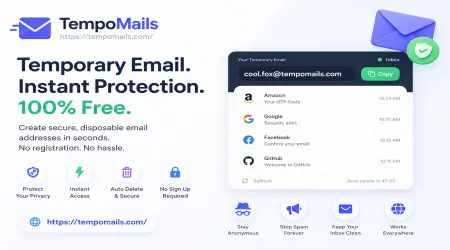
Temp mail exists to solve this. It is a fully functional throwaway email address that receives messages in real time and disappears automatically when the session ends. Tempomail generates one the moment you open the site: no form, no password, no personal information required.
According to the Radicati Group's ongoing email statistics research, a significant share of global email traffic is classified as email spam, much of it traceable back to real addresses submitted through everyday website registration forms.
Main Points
- Temp mail is a session-based, throwaway email address that works like a real inbox but leaves no permanent data trail connected to any identity.
- A temporary inbox service like Tempomail generates addresses instantly with zero registration and automatic deletion when the session ends.
- A disposable email address filters out spam, marketing lists, and data broker collections before they reach a real inbox.
- An anonymous email generator creates addresses untraceable to any personal identity — protecting privacy at every online interaction.
What Is Temp Mail Exactly?
A temporary email is a randomly generated, session-based email address that functions as a fully operational receiving inbox for a defined period before permanently deleting all content and deactivating without any action required from the user.
The address looks and works like any standard email. It has a username, an at symbol, and a domain. Any website can send to it. The inbox receives verification codes, confirmation links, and welcome emails within seconds.
The difference is what happens after. A real email account stores messages indefinitely and links everything to your identity. An email service holds messages only for the active session, then deletes everything permanently. There is no archive. Recovery is not possible. The service creates no connection to any personal data. It's a different animal from an email alias or a masked email address, which still route back to a real inbox behind the scenes.
How a Temporary Inbox Service Works
Open Tempomail. An address appears immediately on screen. Copy it. Paste it into any website requesting an email. The website sends its message. That message appears in the Tempomail inbox within seconds. Click the verification link or copy the code. Close Tempomail when finished. For a closer look at exactly how a temporary email address works behind the scenes, see the full walkthrough.
The session ends. The service deactivates the address. It permanently deletes every message. The entire process takes under a minute and requires zero setup from the user at any stage.
This is what distinguishes a genuine temporary inbox service from simply creating a secondary email account. A secondary account still accumulates history, requires maintenance, and leaves a data trail on the provider's servers. Tempomail leaves nothing behind.
Step-by-Step Guide - How to Use Tempomail
Using Tempomail takes four steps and takes under sixty seconds from start to finish.
Step 1 — Open Tempomail
Go to tempomail.com. A disposable email address appears on the screen immediately. No account creation, no login, and no personal information is required at any point.
Step 2 — Copy the generated address
Select the address displayed in the inbox interface and copy it. A copy button is available directly in the interface for one-click copying.
Step 3 — Paste it into the website requesting your email
Go to the website or app where an email address is required. Paste the Tempomail address into the email field. Submit the form as normal.
Step 4 — Check the inbox and complete the verification
Return to the Tempomail tab. The incoming email verification code, confirmation link, or welcome message appears in the inbox within seconds. Click the link or copy the code as required. The task is complete.
Close the Tempomail tab when finished. The session ends, the address deactivates, and every message is permanently deleted. Nothing about the interaction remains on any server.
Key Benefits of Using Temp Mail
Temp mail delivers five practical advantages over submitting a real email address to any website.
Zero spam risk. A disposable email address absorbs all marketing emails, promotional sequences, and follow-up campaigns. Nothing reaches the real inbox because the temporary address expires before any sustained contact begins — a straightforward way of stopping newsletter spam using a temporary email for good.
No personal data exposure. An anonymous email generator creates an address with no name, no phone number, and no identity link. The website receives a working address. Nothing about the user enters any database, which is also why temp mail sits comfortably within GDPR-style data protection rules.
Instant setup. No registration form, password, or verification step is required. Tempomail generates an address the moment the page loads, the fastest temporary inbox service available for any device. It takes seconds to generate a disposable email address and start using it right away.
Automatic cleanup. The session ends, and everything is deleted permanently. No manual deletion step, no inbox management, and no residual data on any server after the session closes.
Developer efficiency. Clean addresses for every test run. No fake user records accumulating in production databases. No shared test mailboxes are creating cross-test interference. Tempomail generates unlimited fresh addresses programmatically — via the temp mail API built for developers, or for testing email deliverability across providers like Outlook and Yahoo.
Why People Use Disposable Email Addresses
A disposable email address is a temporary address used in place of a real email wherever a website requires verification but has no legitimate reason to contact the user on an ongoing basis. Use cases are real-life and everyday.
When customers sign up for software free trials, they're followed up with emails for several months, billing reminder emails, and win-back emails. All this is absorbed by a throwaway email address and not in any real email address. A common example is signing up for a Netflix free trial using temp mail.
Content downloads behind registration walls deliver their resource to any working address. Providing a real email to access a single PDF creates an unnecessarily long-term data relationship — which is why so many people prefer using temp mail to download gated PDFs and ebooks instead.
Forum and community registrations link the posting history to the submitted email — the same logic behind using temp mail for Reddit signups. Temp mail keeps those activities separated from a real identity entirely.
Signing up for social and creative platforms follows the same pattern: a working inbox for verification, nothing more. That covers everything from Snapchat and LinkedIn to Steam and Roblox. The same applies to AI tools like ChatGPT and Grok, design platforms like Canva Pro, and dating apps like Tinder.
Online marketplace enquiries expose contact details to strangers. A temporary address handles the communication without revealing a permanent contact — it works the same way for freelance platform signups on Fiverr and Upwork, bookings on Airbnb and Uber, and job portal applications where you're only verifying an application, not opening a lasting communication channel.
Online surveys and contests that require an email just to unlock entry work the same way — a disposable address collects the confirmation without any long-term follow-up, and the same goes for entering online contests and giveaways. Travellers use it too, for signing up to hotel or airport WiFi portals while travelling without handing over a real address.
Developer testing requires clean email workflows for each test run. Tempomail provides unlimited fresh addresses with no cleanup required afterwards. Some platforms also try to catch on — here's why some websites block temp mail domains and how Tempomail works around it.
What Makes an Anonymous Email Generator Different
An anonymous email generator is a disposable email tool that creates addresses with no connection to any user identity, device, location, or usage history at any point during or after the session.
Standard email providers collect significant data even during normal use. Profiles are built based on IP addresses, device fingerprints, login times, and message data that are then used for advertising targeting and data sharing agreements.
Tempomail collects none of this. It collects no name or location. The service stores no device data. It retains no session history after deletion. The private email generator creates an address, delivers messages, and removes everything when the session ends. No record of the interaction exists on Tempomail's servers afterwards — a level of anonymity that goes further than using a virtual phone number for verification.
NordVPN's 2026 global privacy survey found that personal data control scores fall as low as 39% in several markets, revealing a wide gap between how safe users feel online and how much real control they have over where their data, including email addresses, ends up.
Temp Mail vs a Secondary Permanent Account
Some users manage spam by creating a second permanent account on Gmail or Outlook. This approach works partially but carries ongoing costs. For the full breakdown, see this temp mail vs real email comparison. Similar questions come up often too, like Tempomail vs 10 Minute Mail and Tempomail vs Guerrilla Mail — each comes down to trade-offs in speed, inbox retention, and domain availability.
Creating the account requires a phone number on most platforms. The inbox still needs periodic monitoring. Messages accumulate and require management. The address still builds a data profile on the provider's servers over time.
Tempomail requires none of this. Each session starts fresh. Nothing carries over. You do not need to manage anything because nothing persists beyond the active session.
When Temp Mail Is Not the Right Choice
Temp mail is the correct tool for one-time verifications and low-stakes signups. It is not appropriate for accounts where ongoing email access matters.
Banking, healthcare, government services, and subscription platforms with billing cycles all require a real email address. Recovery access, transaction confirmations, and account security alerts depend on a permanent inbox receiving messages reliably over time. Because a temporary address isn't built for that, it's worth knowing what your options are for temp mail account recovery if you lose access mid-session.
The practical rule is simple. If you need to receive an email from this service in six months, use a real address.
Conclusion
Temp Mail offers a simple way to protect your real email address during one-time online interactions. A Disposable Email Address helps reduce spam while keeping personal contact details private. Tempomail provides a temporary inbox without registration and automatically deletes messages when the session ends. Ready to try it? Get your free temporary email address now and keep your real inbox spam-free.
About the Author
Written by Sarah Whitfield, Digital Privacy & Email Security Analyst — 6+ years covering inbox privacy, disposable email tools, and anonymous communication services. Ayesha tests and reviews temporary email behaviour across major platforms regularly, and this guide is reviewed on an ongoing basis to stay aligned with current privacy standards. Last Reviewed: August 2026
(FAQs)
What is temp mail used for most commonly?
Free trial signups, one-time content downloads, forum registrations, marketplace enquiries, and developer testing are situations where a website needs an email but has no genuine reason to contact the user afterwards.
How long does a Tempomail address stay active?
For the duration of the session. Closing the browser tab ends the session immediately and permanently deletes the address and all received messages without any user action.
Can a temporary inbox service receive all types of emails?
Yes. Tempomail receives HTML emails, plain text messages, verification codes, confirmation links, and standard attachments in real time during the active session.
Does using Temp Mail protect against data brokers?
Yes. Data brokers compile addresses from website submissions. Using a disposable email address that expires before secondary data sharing occurs prevents the real address from entering broker databases through that interaction.
Is Temp Mail legal to use?
Completely. It is a privacy practice and legal in most jurisdictions to use temporary emails for website verification. Check the terms for the platforms (some restrictions apply).
Can websites detect that a Tempomail address is disposable?
Some platforms maintain domain blocklists. Tempomail rotates its available domains regularly to maintain compatibility across the majority of websites and services used daily. See how this holds up when comparing the best temporary email generators in 2026.
Does Tempomail retain any message content after deletion?
No. All message content, address records, and session data are permanently deleted when the session ends. Nothing is retained, archived, or recoverable afterwards.
How is an anonymous email generator different from a regular email?
A regular email connects to a registered identity and keeps data indefinitely. An anonymous email generator creates an address with no identity link and deletes all data permanently at session end.