Using Temporary Email on Untrusted Websites: Stay Safe and Protect Your Identity
Using Temporary Email on Untrusted Websites: Stay Safe and Protect Your Identity
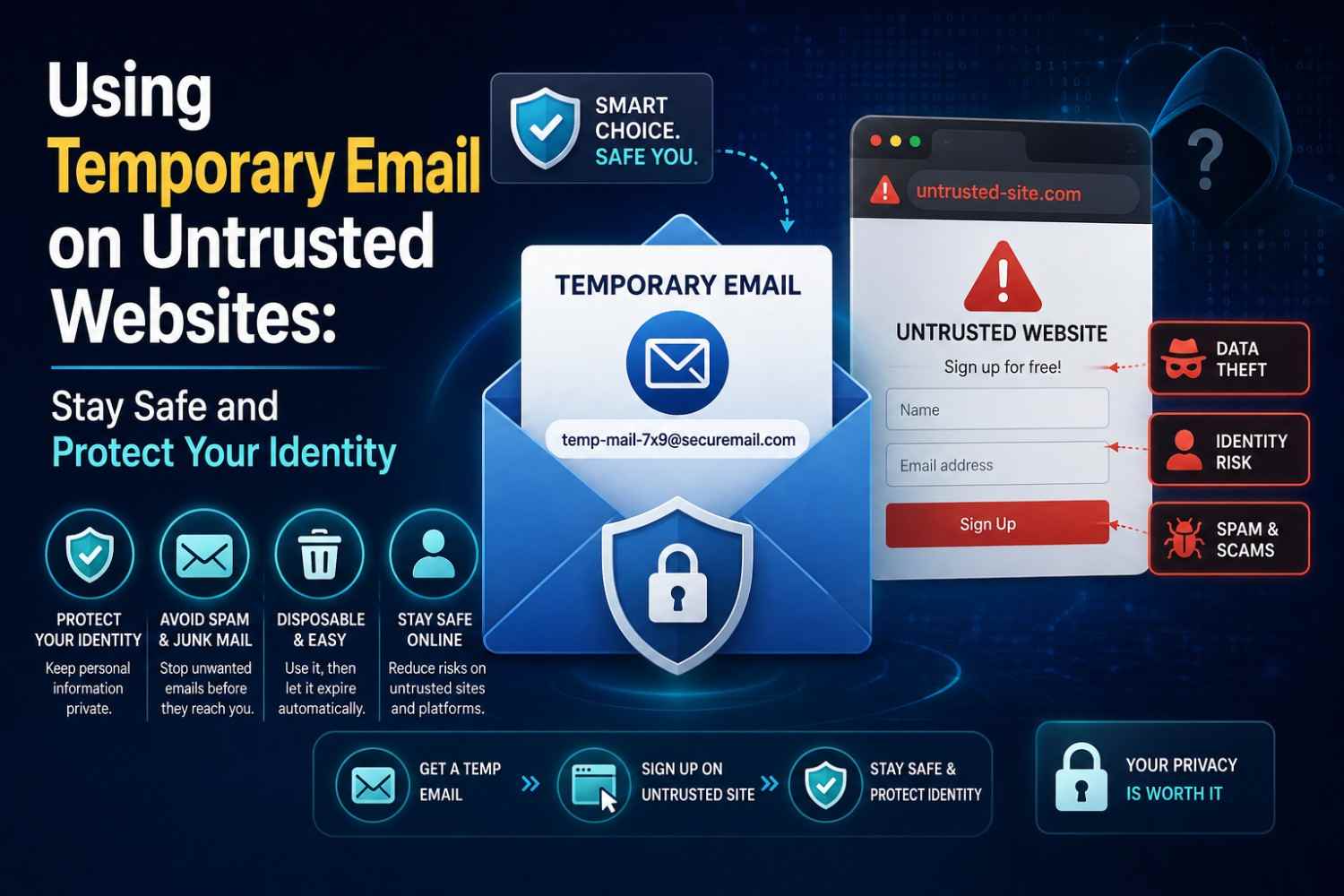
Quick Answer: Temporary email security on untrusted websites keeps your real identity off platforms you cannot verify. A free temporary email generator creates a disposable inbox instantly, handles verification without exposing personal data, and deletes everything when the session ends. If the site turns out to be malicious, your real email was never involved — eliminating the primary attack surface that most phishing and spam campaigns depend on.
Not every website that asks for your email address deserves to receive it — yet almost every website asks anyway. Unfamiliar platforms, newly launched services, obscure discount sites, and unverified forums all represent varying degrees of risk.
Some harvest emails for spam lists. Others sell data to brokers. A small number are outright phishing operations designed to collect real contact information for fraudulent use. Temporary email security addresses this risk at the point of sign-up.
Instead of submitting a real address to an unknown platform, a disposable inbox satisfies the email requirement while keeping actual identity information completely out of the platform's database. This guide explains exactly how to apply that protection.
Main Points
- Temporary email security works by removing the real address from the equation before any suspicious site can collect or misuse it.
- Untrusted website protection via a disposable inbox is effective against phishing, data harvesting, and unwanted marketing exposure simultaneously.
- Anonymous email safety requires no technical setup — a disposable email address generator creates a working address in under three seconds.
- Online identity protection through a temporary inbox is legal everywhere and consistent with data minimisation principles under GDPR and similar frameworks.
Why Untrusted Websites Are a Real Email Risk
Most users underestimate how much damage a single email submission to a malicious or careless website can cause. The consequences extend well beyond spam.
Data harvesting and broker sales
Industry privacy research consistently shows that a large share of consumer platforms share registered email addresses with advertising partners within weeks of sign-up. On untrusted websites, that sharing may happen immediately.
Addresses submitted during registration appear in broker databases, marketing lists, and phishing target files within days. Learning how to block junk emails can reduce this kind of exposure even further.
Credential stuffing targets
Email addresses from low-security websites often enter credential stuffing datasets. Attackers pair harvested emails with common passwords. They then attempt automated logins across hundreds of services.
A real email submitted to an untrusted site may later appear in breach compilations used for these attacks.
Phishing infrastructure
Some websites collect email addresses specifically to build phishing lists. Industry breach reports consistently identify phishing as one of the leading causes of data breaches.
Using a disposable address instead of a real one keeps that email out of any phishing scheme the site may be running.
How Temporary Email Security Works Against Website Threats
Untrusted website protection through a disposable inbox works because it severs the connection between a real identity and the platform at the point of data collection.
When a real email is submitted, it enters a platform's database where it can be stored, shared, sold, and retained indefinitely regardless of subsequent user requests.
When you submit a temporary email address, the platform receives a working address for verification. It gains no persistent contact point. The address expires after the session. Later messages receive a non-delivery response.
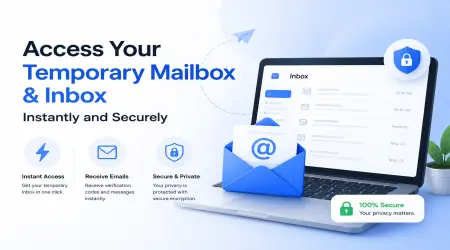
The temporary inbox handles only what is necessary. It receives the verification email or OTP and completes the sign-up. It then provides access to whatever the site offers. Everything else is blocked by design. For a closer look at how the inbox itself behaves, see this guide on accessing your temporary mailbox instantly and securely.
Identifying Untrusted Websites Before Submitting Any Email
Recognising which websites warrant a disposable address reduces risk before any interaction begins.
Signs a website may be untrusted:
- No HTTPS padlock in the browser address bar
- Recently registered domain (check via WHOIS lookup)
- No visible privacy policy or terms of service
- Poor grammar and unprofessional design throughout
- Requests for unusual personal information beyond email
- No clear company information, contact details, or physical address
- Pressure tactics around urgency or limited-time access
None of these signs alone confirms a site is malicious. Together they indicate a higher risk profile that warrants a disposable address rather than a real one.
Specific Threat Scenarios Where Temporary Email Security Applies
Unfamiliar discount and coupon sites
These platforms frequently monetise user data rather than providing genuine savings. Anonymous email safety through a disposable inbox accesses whatever offer exists without providing a permanent marketing contact.
Newly launched platforms and beta services
Early-stage platforms have fewer security resources and less mature data handling practices. A temporary address limits exposure during the period when the platform's security posture is least established.
International or foreign-language websites
Platforms operating under different legal jurisdictions may not honour GDPR or similar data protection requests. Online identity protection via a disposable inbox removes the real address from their systems entirely, making legal compliance irrelevant to the outcome. This approach also lines up with what EU privacy law says about disposable email.
Public Wi-Fi captive portals
Hotel, airport, and cafe Wi-Fi systems often require an email address to grant access. These portals collect contact information with minimal accountability. A disposable address satisfies the requirement while keeping the real identity off a poorly secured network operator's database.
One-time resource downloads
Websites that gate PDFs, templates, or guides behind an email form are collecting lead generation data, not providing a service. A secure temporary inbox delivers the resource without entering the associated marketing sequence. This is one of the most common ways to use temp mail for gated ebook downloads without triggering a follow-up email sequence.
How to Use Tempo Mails Safely on Suspicious Websites
Step 1: Open Tempo Mails before visiting the untrusted site
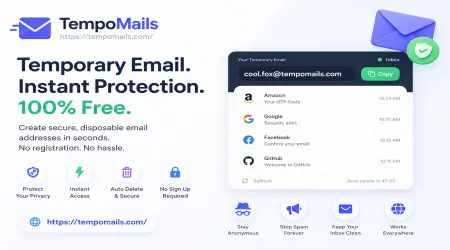
Open the free temporary email generator and copy the instant disposable address it generates.
Step 2: Navigate to the untrusted platform in a separate tab
Keep Tempo Mails open in its own tab throughout the session. Paste the disposable address into the email field on the suspicious site.
Step 3: Complete the sign-up using only the minimum required information
For fields beyond email, provide only the minimum information required. Avoid submitting your real name, phone number, or physical address to platforms you do not trust.
Step 4: Retrieve the verification message from Tempo Mails
Return to Tempo Mails. The confirmation email or OTP arrives within 30 to 60 seconds. The inbox refreshes automatically.
Step 5: Download or access what you came for, then close both tabs
Save any content to your device immediately. Once everything needed is secured, close both the Tempo Mails tab and the suspicious site. All Tempo Mails messages are permanently deleted.
What Temporary Email Security Cannot Protect Against
Honest temporary email security guidance includes its limitations. A disposable address removes the email from the risk equation but does not mask other identifying information.
IP addresses, device fingerprints, browser cookies, and any personal information submitted in other form fields are collected regardless of which email type was used.
For more complete anonymous email safety on high-risk sites, combining Tempo Mails with a VPN and private browsing reduces the overall data footprint significantly.
Additionally, if the untrusted site delivers malware through a download or a phishing link in the verification email, clicking that link creates risk independently of the email address used.
A secure temporary inbox protects identity data. It does not replace antivirus software, browser security settings, or general awareness of phishing link behaviour.
Combining Temporary Email With Other Security Practices
The strongest approach to untrusted website protection layers multiple tools across different threat surfaces.
- Tempomail handles email identity exposure at sign-up.
- A VPN masks your IP address and geographic location. This keeps them out of the platform's server logs.
- Private browsing mode prevents cookies and session data from persisting. They disappear when the browser window closes.
- An up-to-date antivirus scans files downloaded from the suspicious platform. It helps check those files for threats.
- A password manager generates strong, unique credentials for new accounts. This prevents credential reuse across platforms.
Each tool addresses a different data point. Together, they reduce the practical risk of interacting with an untrusted website to a minimum without requiring significant technical knowledge.
Conclusion
Untrusted websites treat email addresses as data assets rather than contact details. The moment a real address is submitted, it enters systems with unpredictable data handling practices, indefinite retention, and no accountability to the user who provided it.
Temporary email security removes that address from the equation entirely. If a website has not yet earned your trust, generate a free disposable email address before you sign up. It doesn't cost anything, requires no setup, and does not leave a trace upon the end of the session.
FAQs
1. Does temporary email security prevent phishing attacks?
It removes your real email from phishing target lists. If the suspicious site was collecting addresses for phishing campaigns, your real inbox is not among the targets.
2. Can untrusted websites detect a Tempo Mails address?
Some apply domain screening. Tempo Mails' domain rotation reduces detection risk. Most consumer-facing platforms do not perform aggressive disposable email checks.
3. Is anonymous email safety enough on its own for high-risk sites?
No. Combine Tempo Mails with a VPN and private browsing for more complete online identity protection across multiple data points simultaneously.
4. What happens if the untrusted site sends malware to my Tempo Mails inbox?
Avoid opening links and attachments in emails from suspicious platforms unless they are from trusted sources. Temporary email security is for your true email address, not your device.
5. Can the same Tempo Mails address be used across several untrusted sites?
Yes, during the same session. The address will expire after the session and will not be available or usable again.
6. Does online identity protection through temp email work for social media sign-ups?
Yes, for basic anonymous registration. Major social platforms may also require phone verification, which temporary email cannot replace. The email step is handled cleanly regardless.
7. Will my real IP address still be visible to the untrusted website?
Yes. A secure temporary inbox covers email identity only. Use a VPN alongside Tempo Mails to mask IP address and location data from the platform's server.
8. Is using a disposable address on a suspicious website legal?
Yes. No law requires individuals to submit permanent email addresses to private websites. Using a disposable address for personal privacy protection is legal in all major jurisdictions.
Author Expertise
Written and reviewed by Daniel Cross, a digital privacy researcher with over eight years of experience in email security, data protection, and online identity practices, who has advised consumer privacy groups on safe browsing habits. This article was independently researched and last reviewed in August 2026 to reflect current threat patterns and platform verification behaviour. Visit our disposable email tools for more guides on staying safe online.