How to Avoid Spam Emails: Proven Tips That Actually Work
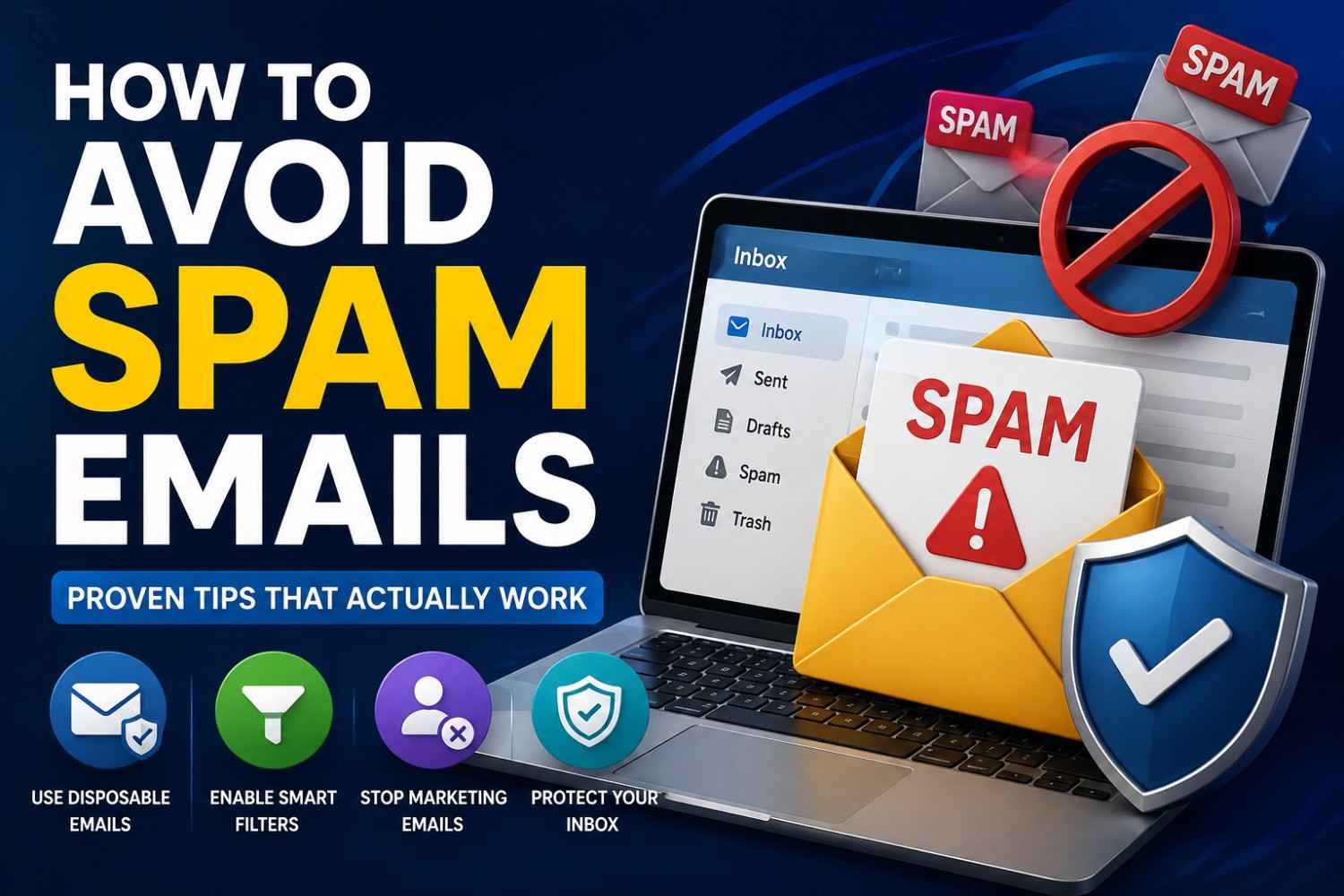
How to Avoid Spam Emails: Proven Tips That Actually Work
Quick Answer: Learning how to avoid spam emails requires more than clicking unsubscribe. The best strategy is to use one-time email addresses with minimal commitment, filter your emails to exclude junk, and practice mindful email habits regarding what email addresses you use. These combined factors will help to reduce unwanted emails at source, instead of just after receipt. Last Updated: August 2026
Main Points
- Effective spam email prevention requires more than just de-cluttering the inbox; it is necessary to block the spammers.
- The majority of spam originates from third-party data sharing, from lists purchased from data brokers, and from website signups.
- Email spam protection works best when applied proactively, before an address is submitted to a new service.
- Tempomail eliminates a major source of unwanted emails by keeping your real address out of low-stakes signups entirely.
Where Spam Actually Comes From
Most people assume spam arrives randomly. Most spam starts with specific actions. Using a real email on a shared website, joining a free trial, or submitting a promotional form can all lead to spam.
Fixing the inbox clutter starts with understanding this. Spam is not random. It is the predictable result of a real address entering systems that were never intended to serve the user's interests.
Many organisations still purchase or rent third-party contact lists to expand their marketing reach. As a result, an email address submitted to one website can end up circulating far beyond where it was originally entered. This is exactly why understanding whether temp mail is safe to use matters before you decide which signups deserve your real address.
Tip 1: Use a Disposable Email for Low-Stakes Signups
The number one best method to reduce unwanted emails is to not provide the real address to sites that don't need it permanently. Free trials, content downloads, promotional forms, and one-time registrations all require only a working email for the initial verification.
They do not need your real address for any purpose that benefits you. Tempomail generates a working disposable address instantly. The verification arrives. The task is completed. The address expires before any marketing sequence can begin. If you're still unsure what a disposable email address actually is and how it differs from a normal inbox, that's worth a quick read before you start using one for signups.
Your real inbox receives nothing from that interaction. This one habit can eliminate the single biggest cause of inbox crap for most people.
Tip 2: Audit Where Your Real Address Has Already Been Shared
Even with better habits going forward, existing spam requires a different approach. Most real inboxes already contain subscriptions, promotional lists, and notification sequences from years of accumulated signups.
Go through the promotional section of your inbox and identify the highest-volume senders. For legitimate senders where unsubscribing is likely to work established retailers, services you actually use unsubscribe directly.
For unfamiliar senders or high-volume bulk mailers where unsubscribing may simply confirm the address is active, use your email provider's spam reporting function instead.
Marking as spam rather than unsubscribing from suspicious sources trains your inbox filter and avoids confirming address validity to potential bad actors. For a closer look at how a burner email works and where it helps most, this breaks down the practical use cases in more detail.
Tip 3: Enable and Configure Your Email Provider's Filters
Email spam protection through provider-side filtering is the automated process by which a mail provider identifies and diverts messages meeting spam criteria into a separate folder before they reach your primary inbox.
All prominent email providers offer some level of email spam protection mechanisms that use built-in filters. The systems of Gmail, Outlook, and Apple Mail make use of machine learning technology to categorise emails. The filters become more efficient when users identify spam emails; such actions teach the system to find other emails that can be considered spam.
Beyond default filters, most providers allow custom rules. Setting a rule that automatically archives or deletes messages from any domain not in your contacts adds a useful secondary layer for users with persistent spam volume from unfamiliar senders. Pairing these filters with a way to avoid spam emails at the source gives you two layers of protection instead of relying on filters alone.
Tip 4: Stop Marketing Emails at the Subscription Level
Stop marketing emails refers to the process of removing a real email address from active marketing lists through direct unsubscription, provider-level filtering, or address replacement with a disposable alternative for future signups.
Unsubscribing works with legitimate marketing emails from companies that follow GDPR and the CAN-SPAM Act. These laws require companies to process unsubscribe requests within a defined period.
For services where you are uncertain about compliance, avoid unsubscribing directly. Report as spam and let the filter handle future messages. The unsubscribe link in non-compliant emails sometimes functions as an address confirmation mechanism rather than a genuine removal request.
The most reliable way to stop marketing emails before they start is to never submit your real address to marketing-heavy services in the first place. Tempomail handles this for any signup where ongoing communication is not needed.
Tip 5: Reduce Unwanted Emails From Data Brokers
Data broker lists also generate significant spam. The databases gather email addresses from various sources and sell them to marketers. This makes it simple to get emails from individuals you don't know.
Limit or avoid giving out your real email address and/or submit opt-out requests to reduce broker-related spam. You will have to take the time to opt out, but doing so now will stop future spam.
Don't use your actual email address on forums, comments, or social media. This makes it more difficult for a broker to pick up your address. Using a disposable email address generator for public-facing interactions where email is required is the more practical long-term approach.
Data brokers routinely resell the same email address to multiple advertising networks over time, meaning a single form submission can quietly multiply into several unwanted senders within a year.
Tip 6: Keep Different Addresses for Different Purposes
A practical middle-ground approach for how to avoid spam emails without relying exclusively on disposable inboxes is maintaining two or three real email accounts with clearly defined purposes.
One address handles financial services, healthcare, and any account requiring long-term recovery access; a second handles subscriptions, newsletters, and services where some ongoing communication is expected but not critical.
A third, or Tempomail, handles everything else: one-time verifications, promotional access, and any signup where the purpose ends the moment the verification is complete. If you're still weighing when a disposable inbox makes sense versus a real one, this comparison of temp mail versus real email lays out exactly where each one fits.
This structure limits blast radius. If the subscription address is spammed, it will be dropped, and other accounts associated with that address will not be affected.
(FAQs)
Does unsubscribing from spam actually help?
Yes, for legitimate senders who comply with email regulations. Unsubscription can be proof for bulk mailers or non-compliant senders that your address is active. Mark as spam if the sender is not known or the quantity indicates that it is not.
Can email spam protection filters catch everything?
No filter achieves 100% accuracy. Filters trained by user feedback improve over time, but some spam reaches the primary inbox regardless. The best results come from combining good filtering, disposable addresses for new signups, and upstream prevention, rather than relying on any single method.
How long does it take to stop marketing emails after unsubscribing?
Most jurisdictions have regulations that state that processing must be done within 10 business days. Many legitimate senders process requests faster. If emails continue beyond this window, report the sender to your email provider and relevant regulatory body.
Is Tempomail compatible with all email verification systems?
Tempomail works with the majority of platform verification systems. Some services maintain domain blocklists. Tempomail rotates domains regularly to maintain broad compatibility, though a small number of platforms may block specific domains periodically.
Does using multiple email addresses reduce spam effectively?
Yes. Separating address use by context limits how far any single address spreads. If one address gets targeted with spam, you can change it without impacting accounts linked to your main address.
What is the fastest way to clean an existing inbox full of spam?
Unsubscribe from any reputable senders. Mark senders that are not compliant as spam. Automatically archive emails from high-volume promotional senders using the email filters. Going forward, use Tempomail for any signup not worth giving a real address to.
About the Author
Written by Sarah Coleman, a Digital Privacy Analyst with 8 years of experience in email security, anti-spam systems, and inbox management. Content is based on current platform behaviour and tested approaches to reducing unwanted email volume.