How to Stop Email Spam Without Unsubscribing from Everything
How to Stop Email Spam Without Unsubscribing from Everything
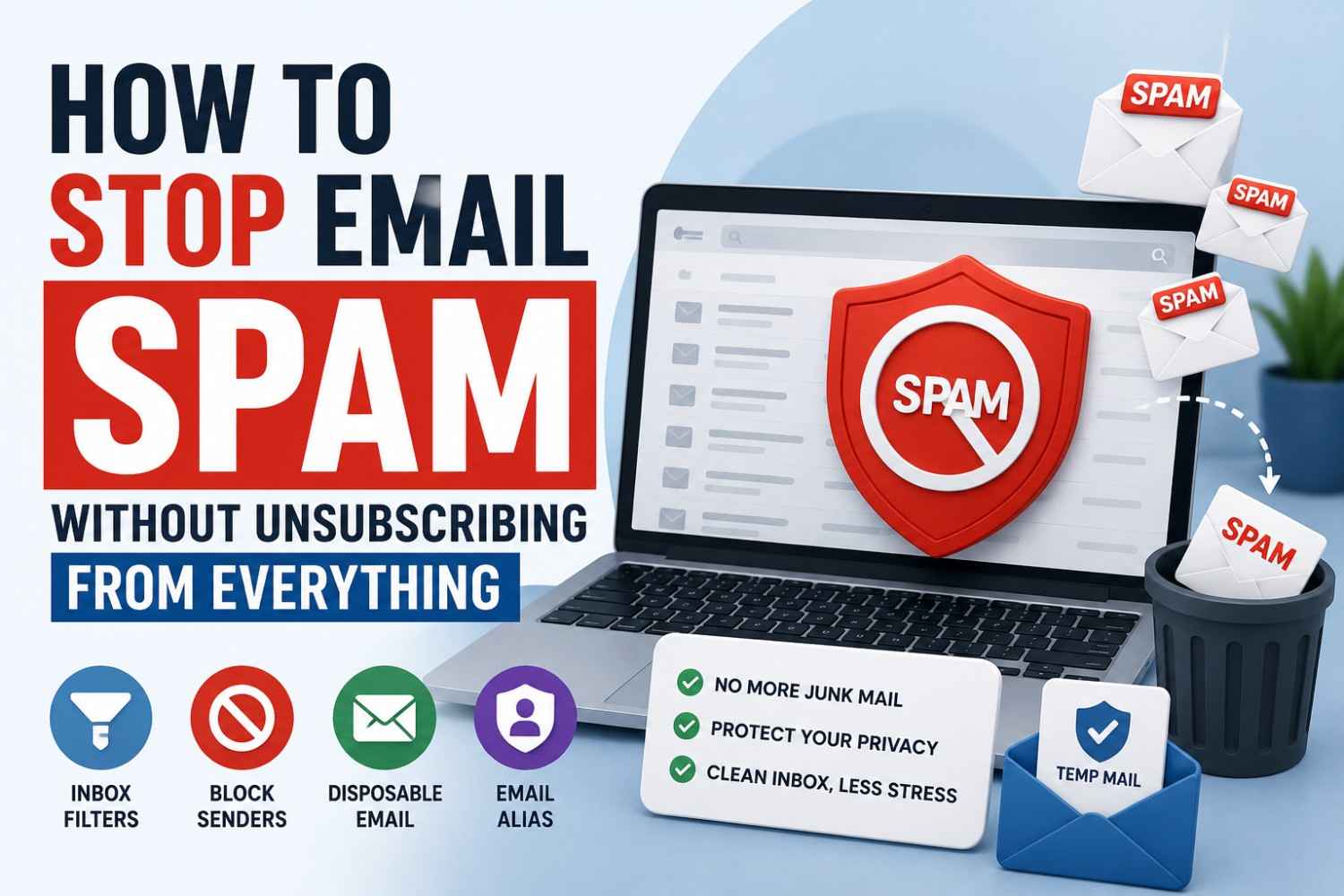
Quick Answer: You can stop email spam without unsubscribing by combining inbox filters, sender blocking, disposable email addresses for new sign-ups, and an email alias to reduce inbox spam at the source, instead of manually unsubscribing from every mailing list your address is registered to, which is slow and rarely works.
Main Points
- Unsubscribing is slow, and unreliable filters block unwanted emails, which work faster for an inbox you already use.
- No new spam enters your real inbox if you use disposable email addresses.
- Email privacy protection is enhanced the most if you use both reactive tools (filters) and preventative tools (temp mail).
- Avoid clicking on unsubscribe links in emails that you didn't subscribe to. It confirms your address is active.
Everyone gets a dozen or so junk mail messages a week. The experts advise unsubscribing from all lists. In practice, unsubscribing takes time and often fails. It can also confirm that your address is active. Better ways exist to reduce spam.
Valimail’s 2025 Email Security Report discovered that 85% of global emails are unsolicited. A 2025 Statista report indicates that users spend 11 minutes a day dealing with emails from undesired individuals and brands. Both reports highlight the same problem: most spam management advice is reactive and time-consuming. Understanding how temporary email works behind the scenes makes it easier to see why prevention beats cleanup.
Why Unsubscribing Alone Does Not Work
An unsubscribe is only effective from a legitimate company that respects opt-outs. Many senders ignore unsubscribe requests or delay processing them. Others use the click to confirm that someone monitors the address. That often leads to more spam.
Never click unsubscribe in emails you did not request. The link may confirm that someone uses the address. Valid addresses are highly sought after by data brokers and offered to marketers.
How to Stop Email Spam Without Unsubscribing: 6 Methods
1. Use Sender Filters to Route Spam Automatically
Fortunately, most email services allow you to filter incoming emails that feature the same sender or subject heading. They can then move those emails to a designated label folder, remove them completely from your inbox, and, best of all, it takes no more than 2 minutes to filter a specific sender of future emails.
In your email configuration, go to the filters/rules portion. Set a rule to delete messages from the sender you don't want from the trash. This is the quickest method to reduce inbox spam from the recurrent sources without engaging with the sender.
2. Block Senders at the Domain Level
When spam is received from several addresses, block the domain rather than individual addresses. The vast majority of email clients support domain-level blocking. This causes all the messages to be marked as spam or junk in that domain.
3. Mark Messages as Spam Consistently
Email providers train their spam filters based on user behaviour. Instead of just deleting a message, mark it as spam. This trains the filter to recognise similar messages automatically over time, so future spam from the same pattern gets sorted out before it ever reaches your inbox.
Only label emails as spam when they actually are spam. If you erroneously classify a normal email message as spam, filters will not do as good a job as they could, and your ability to deliver legitimate mail messages could be adversely affected.
4. Use a Disposable Email Address for Future Signups
This is the most effective form of email privacy protection to prevent new spam from reaching your actual email account. When signing up for trials, downloading gated content, or registering on new websites, use a disposable email. If you're new to the concept, it helps to first understand what a disposable email address actually is and how it differs from a permanent inbox.
Tempomail generates a working temporary address in one click with no registration required. The address receives the verification code or confirmation link, and expires automatically once the session ends.
Any marketing emails sent to it afterwards have nowhere to go. This approach to how to stop email spam without unsubscribing is preventative rather than reactive, which is why it holds up better over time.
5. Use an Email Alias Service
Email alias services create a unique forwarding address for each website. Messages reach your real inbox, and you can disable any alias that starts receiving spam.
The real address remains private throughout. Services such as SimpleLogin, AnonAddy, and Apple's Hide My Email use this model. Unlike disposable addresses, aliases can be permanent and selectively deactivated.
They work well for services you want to keep using but want to insulate from your primary inbox. For one-time signups, a disposable address from Tempomail is faster and requires no account setup. If you're unsure which option fits a given signup, a quick look at how temp mail compares to a real email account makes the choice clearer.
6. Audit Your Real Email Address Exposure
Some spam comes from older exposures. These can range from data breaches to lists you got from one of the websites that sold your information years ago, with no idea what they would be used for.
One of the tools you can use to check if your email address has been compromised in any known data breaches is Have I Been Pwned. Before you rely on a disposable inbox for anything sensitive, it's worth checking whether temp mail is safe to use for that particular case.
If your address has been widely exposed, reducing inbox spam in that inbox may reach a practical ceiling regardless of the filters you apply.
In that situation, the most effective long-term solution is to create a new primary email address and use disposable addresses for all new registrations from that point forward.
The Most Effective Combination
No single technique can handle everything, however, and to stop everything at the top level of our problem, we must combine several defences:
- Filters and sender blocking for spam are already reaching your current inbox.
- Consistent spam marking to train your provider's algorithm over time
- Disposable addresses from Tempomail for all new signups going forward
- An alias service for accounts you need long-term but want to isolate from your real address
- Periodic breach checks to understand whether your address has been exposed in leaked datasets
This solution is designed to solve the issue and the constant stream of spam that creates it, and it's the only way to really reduce inbox spam, not just manage it.
Final Thoughts
Knowing how to stop email spam without unsubscribing means shifting from a reactive approach to a preventative one. Filters clean up what has already arrived.
Disposable addresses stop new spam before it reaches you. Used together, they produce a meaningfully cleaner inbox without the hours of unsubscribing that rarely work as intended.
Tempomail is the fastest starting point for the preventative side of this strategy. Create a temporary address, sign up and let the temporary address receive the emails.
(FAQs)
Is it safe to click unsubscribe links in marketing emails?
Unsubscribe only from trusted companies that you know. Don't click it in emails you don't recognise, as it could verify that your email address is active.
How long do email filters take to work?
Filters apply immediately after setup. All future emails from that sender or domain are automatically forwarded into the filter. When applying the filter as a retroactive filter, existing messages remain in your Inbox.
Can I use Tempomail as my permanent email address?
Tempomail is designed for temporary use. The address expires when the session ends. Use it for signups, verifications, and trials, not as your primary inbox.
What is the difference between email aliasing and a disposable address?
An alias is like a forwarding address, directing messages to your “real” Inbox until you turn it off. A disposable address is temporary and works best for one-time signups.
Will blocking a sender stop all emails from that company?
Blocking a sender address stops messages from that specific address. Some companies send from multiple addresses or domains. Domain-level blocking covers every address on the same domain. It works well when spammers use different sender names.
Does using disposable emails hurt my ability to recover accounts?
Use a permanent e-mail for accounts that you intend to keep. It will be required for the recovery, security warnings, and future communication. This matters most for financial accounts — see our guide on using a disposable email for accounts like PayPal for the risks involved.
How do I check if my real email has been in a data breach?
Go to Have I Been Pwned and enter your email address. The tool searches known breach databases and shows whether they include your address. You do not need an account.
What is the fastest way to reduce inbox spam starting today?
For future sign-ups, use 'Tempomail' and set filters for the ongoing spammers. These are all things that will help defuse spam and sanitise your inbox.